 VETERAN TOOLS
Dislocation, Shoulder
Dislocation, Shoulder is a VA-ratable condition under diagnostic code 5202 in the Shoulder & Arm category. Maximum rating: 80%.
Shoulder Range of Motion
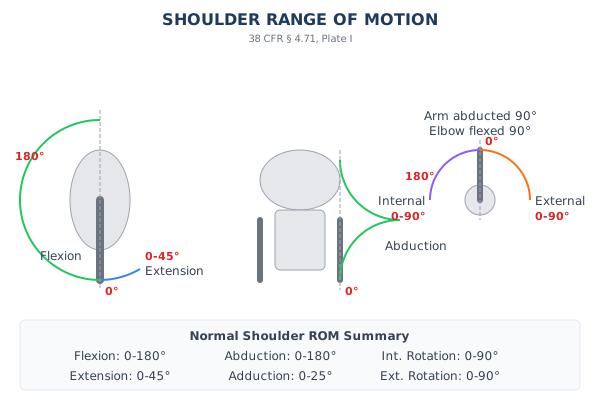
Source: 38 CFR § 4.71 - Measurement of ankylosis and joint motion
Rating Criteria
Swipe sideways to view the full rating criteria.
| Rating | Criteria |
|---|---|
| 80% | Loss of head of humerus (flail shoulder), major arm |
| 70% | Loss of head of humerus (flail shoulder), minor arm |
| 60% | Nonunion of humerus (false flail joint), major arm |
| 50% | Nonunion of humerus (false flail joint), minor arm |
| 50% | Fibrous union of humerus, major arm |
| 40% | Fibrous union of humerus, minor arm |
| 30% | Recurrent dislocation at scapulohumeral joint, major arm, frequent episodes and guarding of all arm movements |
| 20% | Recurrent dislocation at scapulohumeral joint, minor arm, frequent episodes and guarding of all arm movements |
| 20% | Recurrent dislocation at scapulohumeral joint, major arm, infrequent episodes and guarding of movement only at shoulder level |
| 20% | Recurrent dislocation at scapulohumeral joint, minor arm, infrequent episodes and guarding of movement only at shoulder level |
| 30% | Malunion of humerus, major arm, marked deformity |
| 20% | Malunion of humerus, minor arm, marked deformity |
| 20% | Malunion of humerus, major arm, moderate deformity |
| 20% | Malunion of humerus, minor arm, moderate deformity |
Important Notes
Major = dominant arm, Minor = non-dominant arm. See 38 CFR § 4.69 for determination of major/minor.
Filing Tips
Pro Tip: The VA won't connect the dots for you. That's your job. Build the paper trail before you file.
Gather medical evidence showing a current diagnosis of this condition.
Document in-service events, injuries, or exposures that caused or aggravated this condition.
Consider a nexus letter from a medical professional linking your condition to service.
Review the rating criteria for DC 5202 to understand what symptoms warrant higher ratings.
Quick Links
Related Conditions
Above insertion of deltoid
DC 5121
Acromioclavicular Separation
DC 5203
Amputation - Below the Point where the Deltoid attaches to the Arm
DC 5122
Amputation - Below the Shoulder, but Above the point where the Deltoid attaches to the Arm
DC 5121
Amputation - Forequarter Amputation
DC 5120
Amputation - From the Shoulder Joint Down
DC 5120
Ankylosis - Shoulder Joint
DC 5200
Arm, limitation of motion
DC 5201